
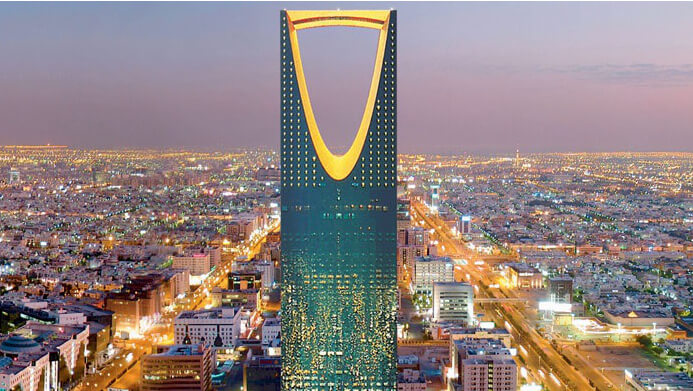
Setting up international schools in Saudi Arabia: school management, training and school improvement
Update, 8 August 2026. Saudi Arabia approved a new General Education Law on 24 July 2026, repealing the Private Schools Regulations and the Foreign Schools Regulations. It takes effect around 20 January 2027. For what it changes for schools already running, see Saudi Arabia’s New Education Law Lands in the Operating Years. The article below dates from 2022.
Everyone is talking about Saudi Arabia’s Vision 2030 as a unique and dynamic pathway for the future. It represents a deeply ambitious plan to ensure the Kingdom achieves its vast potential. International Schools in Saudi Arabia are set to expand too.
Under the Kingdom’s plan, the education sector is one of the main pillars for economic and social growth and they are now enabling access for overseas education providers, companies and international schools to establish operations in the Kingdom.
Global Services in Education recently visited Riyadh to meet with new partners, schools, investors and developers to confirm our new strategy for expansion in the region. The market is definitely ripe for rapid growth and change.
We listened, we learned and we are now set to launch a plan.
Girls, Boys or Co-ed for International Schools in Saudi Arabia
As a rule, education in Saudi Arabia used to be strictly segregated along gender lines. Under new guidelines schools may now offer coeducational classes in some grade levels including grade 4 and above.
It will be interesting to see how schools manage this.
Research has proven that boys and girls are often advantaged by single sex classes. Girls especially do better in the Maths and Sciences, as well as some other curriculum areas when they are in girls only classes and the curriculum is designed and adjusted to meet their needs. It could be argued that a rapid move towards coed classes could actually disadvantage girls if it is not managed strategically.
Change for the sake of change or is this a much more complex discussion?
We have developed an opinion on this and will launch models that match a strategic plan around gender based pedagogy.
US, UK or other Curriculums for International Schools in Saudi Arabia
US and UK curriculums are already quite popular in the Kingdom. In fact several schools offer a dual pathway program on the same campus. As the international market sets to expand rapidly, schools will quickly adopt international curriculum, but it will be important that they make the right choices.
One of the key observations we made was that decisions by schools, and parents, were very focussed on curriculum content, educational structures and perceived pathways to university, rather than a complete understanding of what US, UK, or other curriculums really represent. In truth, students can go to any university in the world with any of the major curriculums so we are not sure that parents are fully informed about education pathways and how to make the best choices. US, UK, Australian, Finish and IB schools have unique identities that go well beyond their textbooks and their exams. Each should offer signature experiences that reflect holistic development, in different ways. There are several unique international models that go beyond choices of textbook and exams.

Overseas Destination for Saudi Students
Saudi Arabia is changing. Scholarships fuelled overseas study in the past but now there is a growing demand among self-funded students, therefore broadening choices and potentially changing trends.
In 2019, approximately 70,000 Saudi students studied abroad. The US has always been the top destination for Saudi students followed by the UK, Australia, and Canada. Saudi students are mostly interested in studying engineering, business, medicine, and computer science.
We know that political influences on the destination side related to study visas, post-study work opportunities and other factors influence study destinations. It will be interesting to see if trends change.
The Balloon That Can Burst for International Schools in Saudi Arabia
As educators and business people who have set up and led schools in China for more than 12 years we have seen first hand what happens during high growth periods for international education. ( Global Services in Education )
Some schools will expand rapidly and be profitable short term, in spite of relatively poor quality. In truth, schools in China did not have to be “A class” when the market first opened up. At that time parents did not have better practices to compare schools with. If it was staffed with foreigners, offered a non-Chinese curriculum and their children enjoyed a different experience, parents were somewhat satisfied. That already appears to be the case in Saudi Arabia. Some schools have expanded fast with only moderate quality standards. There is room for improvement and enhancement.
A big focus on famous school brands attracts parents short term but in China more than 10 years ago, many of these schools found the market very difficult as they had limited experience adapting to unique cultural contexts, navigating community relationships and adapting for a completely different clientele than their students back home. A famous school in the UK, US, Australia is not best “copied” like a McDonalds franchise model. In fact even Mc Donalds and KFC learnt lessons of how they needed to adapt their service, menu, marketing and operations for different contexts.
In China there were countless schools of approximately 200 students after 3-5 years. We described it as the “China ceiling.” enrolment was unable to expand beyond meeting just a moderate demand of a few hundred students. As time went on parents became more discerning and no longer tolerated poor teacher quality and school operations. The natural shake out occurred and a few good schools edged ahead while others fell behind.
Where to from here?
Our short but very comprehensive visit in Riyadh confirmed that the demand is very high for private and international expansion in Saudi Arabia.
Facilities are in some cases are sound but many have not been designed by educators with an understanding of the standards required to deliver best practice pedagogy. Some adaptions will be required and we are already providing advice to some education groups about what is required.
Curriculum delivery in some cases is very “content” focussed and teacher training will be essential. We will be delivering an extensive range of training programs starting from September 2022. We are fortunate to have fully accredited and certified programs ready for delivery.
Schools in some cases will need to review their programs and make adjustments to match standards. Not all of this will require significant investment but some changes in the ways schools operate will be essential. We will be conducting some of these 360 degree reviews in September.
If you want to learn more about the steps required to set up a school or an international school franchise in all major regions of the world check out some of our other articles:
– Steps to Setting Up a New School
– 10 Steps and Articles on How to Set Up a New School
– GSE International School Franchise Models
To talk about your school project, reach us through the contact page.
About GSE
Global Services in Education plans and opens international schools for investors, developers and governments, and manages them once they are running. GSE has delivered more than 60 school and education projects across 28 countries. Management agreements run a minimum of ten years.
The company was founded in 2011 by Greg Parry and Shanna Parry.