

Investing in International Education
Education is widely recognized as the most powerful investment for the future of individuals and nations. Research shows that investing in international education not only makes a lasting difference in people’s lives but also has a positive impact on the economy. Investing in international education is not only the right move but also a smart one for economies.
The power of investing in international education extends beyond just providing knowledge and skills to individuals. It leads to better health, empowerment, and employment opportunities, and has a significant impact on a country’s economic growth. Studies show that each additional year of education boosts a person’s income by 10% and increases a country’s GDP by 18% [1]. Furthermore, research estimates that if every child learns to read, it could mean 170 million fewer people living in poverty [2]. However, despite the importance of education, many low-income countries still lack the resources and capacity to provide universal basic education of quality to all children and adults [3].

The funding gap needed to provide basic education for all children, youth, and adults has increased to US$ 26 billion [4]. This presents an excellent opportunity for impact investors to mobilize new funding, enable private sector engagement in both public and private education service delivery, and introduce approaches or tools to improve efficiency in the service delivery, promote innovation in teaching and learning methods, and monitor outcomes and systemic effectiveness [5].
Impact investing in international education remains nascent but has the potential to deliver immediate financial returns while reaching the most vulnerable beneficiaries. Impact investors look at the risk and return of an investment as well as the positive and social impact it may generate [6]. Private capital can fill the perceived lack of innovation in education by funding direct service provision and spurring innovations that increase equitable access, enhance quality, and ensure retention [7].
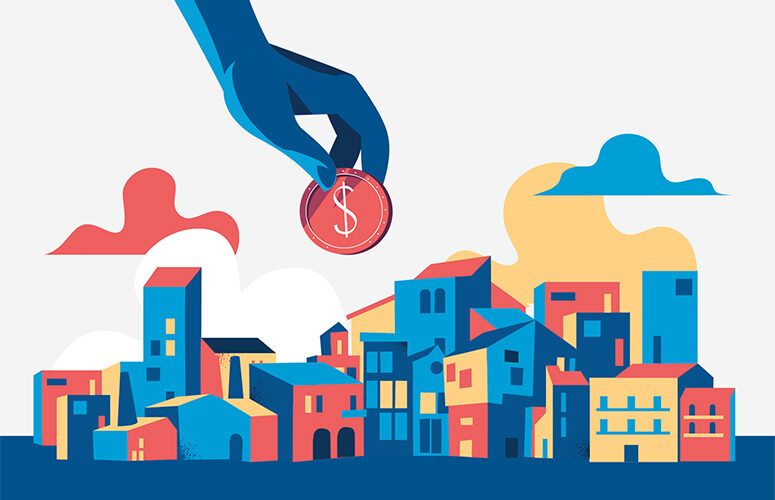
Impact capital differs from commercial private capital in that it seeks to reach the most vulnerable beneficiaries and differs from private philanthropic capital in that it seeks to apply market-based innovations to ensure financial sustainability, if not financial profit [8]. The challenge for impact investors is to catalyze models and approaches that target high impact and financial sustainability simultaneously.
Investors can look to interventions in the broader educational ecosystem, from low-cost tablets that revolutionize the textbook industry to back-office management systems to reduce teacher absenteeism [9]. They can also consider channeling capital through funds and intermediaries to deploy larger amounts more efficiently [10]. Dedicated education intermediaries with proven models can enable investors to overcome fragmentation, diversify risk, and invest larger sums.
Investing in international education is a question of mindset.
The decision to invest in this field has a far-reaching impact on the environment, the economy, and society. It is an investment in tomorrow with a proven commitment to a better world. Therefore, it is essential to maintain realistic expectations and establish philosophical clarity upfront [11]. Funders need to be clear upfront about their priorities and timeline, taking into consideration the positive social and environmental impacts. They should also adopt a more flexible definition of success and support a model that raises the bar for quality education, pushing the public sector to meet that bar [12].
Investors can focus on innovation and seek innovation through collaborative processes [13]. Measuring and evaluating impact on education quality and access are also critical factors for success. Therefore, investors should request evidence of model effectiveness and impact on education quality and access [14].
In conclusion, impact investing in international education is a powerful tool for social and economic development. It has the potential to generate positive and sustainable returns while creating a meaningful impact on society. As investors and leaders of international education groups, we must invest more effectively in learning, improving learning assessment, and being accountable to communities for education results. We must invest more equitably to ensure that people who are most in need have access.
References and further reading:
- UNESCO Education 2030 Framework for Action: https://en.unesco.org/education2030-framework-action
- World Bank, “The Learning Generation: Investing in Education for a Changing World”: https://openknowledge.worldbank.org/handle/10986/25070
- United Nations, Sustainable Development Goals: https://sdgs.un.org/goals/goal4
- World Economic Forum, “Why the Future of Work is Learning”: https://www.weforum.org/agenda/2019/01/why-the-future-of-work-is-learning/
- The Guardian, “Education for All: The Future We Want”: https://www.theguardian.com/education/2015/may/19/education-for-all-the-future-we-want
- ImpactAlpha, “New Education Investments Seek to Prove Impact, Generate Returns”: https://impactalpha.com/new-education-investments-seek-to-prove-impact-generate-returns/
- Education Investor Global, “The Year in Review: Education Impact Investments Gain Traction”: https://www.educationinvestor.co.uk/analysis/the-year-in-review-education-impact-investments-gain-traction/
- OECD, “Financing Education 2019: Investment in Learning”: https://www.oecd.org/education/financing-education/financing-education-2019-investment-in-learning-6cee1888-en.htm
- UNICEF, “Investing in Education Yields Significant Development Benefits”: https://www.unicef.org/education/investing-education-yields-significant-development-benefits
- Brookings Institution, “The Economic Case for Education”: https://www.brookings.edu/research/the-economic-case-for-education/
- Harvard Business Review, “The Business Case for Investing in Education”: https://hbr.org/2016/06/the-business-case-for-investing-in-education
- World Bank, “Education and Development: Evidence from Randomized Control Trials”: https://www.worldbank.org/en/topic/education/publication/education-and-development-evidence-from-randomized-control-trials
- EdTech Magazine, “Why Investing in Education Technology Can Help Bridge the Divide”: https://edtechmagazine.com/k12/article/2021/08/why-investing-education-technology-can-help-bridge-divide
- Impact Investing 101, “What is Impact Investing?”: https://www.impinv101.com/what-is-impact-investing/
To talk about your school project, reach us through the contact page.
About GSE
Global Services in Education plans and opens international schools for investors, developers and governments, and manages them once they are running. GSE has delivered more than 60 school and education projects across 28 countries. Management agreements run a minimum of ten years.
The company was founded in 2011 by Greg Parry and Shanna Parry.