
In recent years, there has been a growing trend in South Korea where parents are opting for foreign schools instead of the public education system for their children. The competitive nature of the Korean education system has led to gruelling years for students, causing pressure and taking a toll on their mental health. Therefore, more parents are looking for alternative approaches to education.
Foreign schools, also known as international schools, offer globally recognized programs such as the UK curriculum IGCSE and A Levels, International Baccalaureate, and the US-based Advanced Placement. These schools are mainly comprised of international students, but they are also popular among Korean parents. However, strict prerequisites such as a minimum number of years enrolled at a school overseas must be met for Korean passport holders to attend.
Parents choose foreign schools for their children for several reasons. Foreign schools have a different approach to education compared to Korean schools, which focus on rote learning, and grades solely determine a student’s worth. Students at foreign schools adhere to an absolute grading policy, which reduces academic stress and pressure on students. Moreover, foreign schools emphasize nonacademic grades and encourage participation in extracurricular activities.
The number of Korean students studying at international schools has been increasing steadily in recent years, with over 60,000 Korean students enrolled in international schools in 2019. Many Korean parents choose international schools because they offer a more diverse and multicultural environment for their children to learn in.
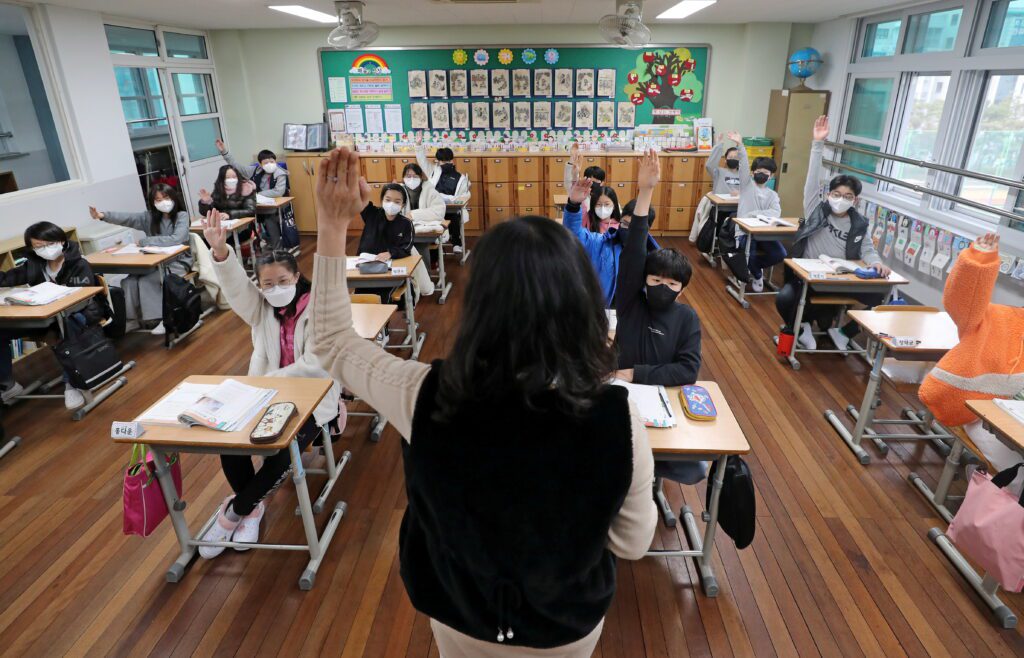
The Korean Federation of Teachers’ Associations conducted a survey which found that over 90% of teachers in Korea feel that students are experiencing severe academic stress. Hence, international schools in Korea are seeing a surge in applications as parents seek an alternative to the stressful Korean education system.
A study by the Korean Education and Research Information Service found that international schools in Korea generally have a higher percentage of students who go on to attend prestigious universities than Korean public schools. The study also found that international schools offer a more diverse range of subjects and teaching methods, which can better prepare students for the global job market.
While South Korea’s education system is known for its high-achieving students, it is quite demanding, with students often spending between 12 to 16 hours per day at school or at a special after-school academy called a hagwon. The school system is very test-focused and goal-oriented, urging students to concentrate on their results. This high level of academic competitiveness has led to a high rate of suicide, especially among teenagers, with academic distress being cited as the number one factor.
Foreign schools are becoming an increasingly attractive option for parents in Korea who want to provide their children with a different approach to education. The benefits of a Western approach to pre-collegiate education and a focus on nonacademic grades and extracurricular activities are drawing parents away from the intense competition and gruelling years of Korean public schools and private cram schools. However, it is essential to note that some Korean-dominated international schools can also promote this level of academic achievement pressure. In general, foreign students from primary school age to postgraduate will find a welcoming home in Korean schools, which place great emphasis on moral and social development among students, as well as an appreciation for Korean society and culture.
Global Services in Education is currently working on new projects in South Korea and the enquiries keep coming. Demand is increasing and we have created some unique and innovative models for parents seeking alternatives.
Read our Series of blogs on South Korea: South Korea, Covid-19 & Education Technology | SOUTH KOREA: Setting Up a New School | The Future of Hagwons in South Korea Post Covid-19 | Legal Requirements to Establish & Operate an Educational Institution in South Korea
Learn more through these news articles related to the expansion of Korean foreign and international schools:
- Korean parents turn to foreign schools as alternative to ‘Daechi hell’
- $1k per tuition subject: S. Korea’s ‘Daechi mums’ go all out to put their kids in elite schools
To talk about your school project, reach us through the contact page.
About GSE
Global Services in Education plans and opens international schools for investors, developers and governments, and manages them once they are running. GSE has delivered more than 60 school and education projects across 28 countries. Management agreements run a minimum of ten years.
The company was founded in 2011 by Greg Parry and Shanna Parry.