
What are the Implications for Educators: Understanding the Molecular Basis of Long-Term Memory
Understanding brain physiology and long term memory can help educators develop more refined and improved teaching practices. Many of our childhood memories, such as our first trip to the zoo or the day we learned to ride a bicycle, last a lifetime. But what allows these memories to endure for so many years? A recent study published in the journal Science Advances provides valuable insights, revealing a biological mechanism that explains how long-term memories are formed and maintained. These findings advance scientific understanding and offer important implications for educators seeking to enhance learning and memory retention in their students.
Long Term Memory: The Role of KIBRA in Memory Formation
The study, conducted by an international team of researchers, focuses on a molecule called KIBRA, which acts like a “glue” that helps stabilise memory formation. Traditionally, research on long term memory storage has centered on the individual actions of specific molecules. However, this new study, led by André Fenton from New York University and Todd Sacktor from SUNY Downstate Health Sciences University, highlights the collaborative role of KIBRA and another enzyme, PKMzeta, in ensuring that memories are stored over the long term.
Neurons store information through patterns of synaptic strength—some synapses are strong, while others are weak, defining the connectivity and functionality of neural networks. Although the molecules within synapses are relatively unstable and are constantly moving and being replaced within hours or days, some long term memories can last for years or even decades. This raises a critical question: How can memories remain stable despite this molecular turnover?
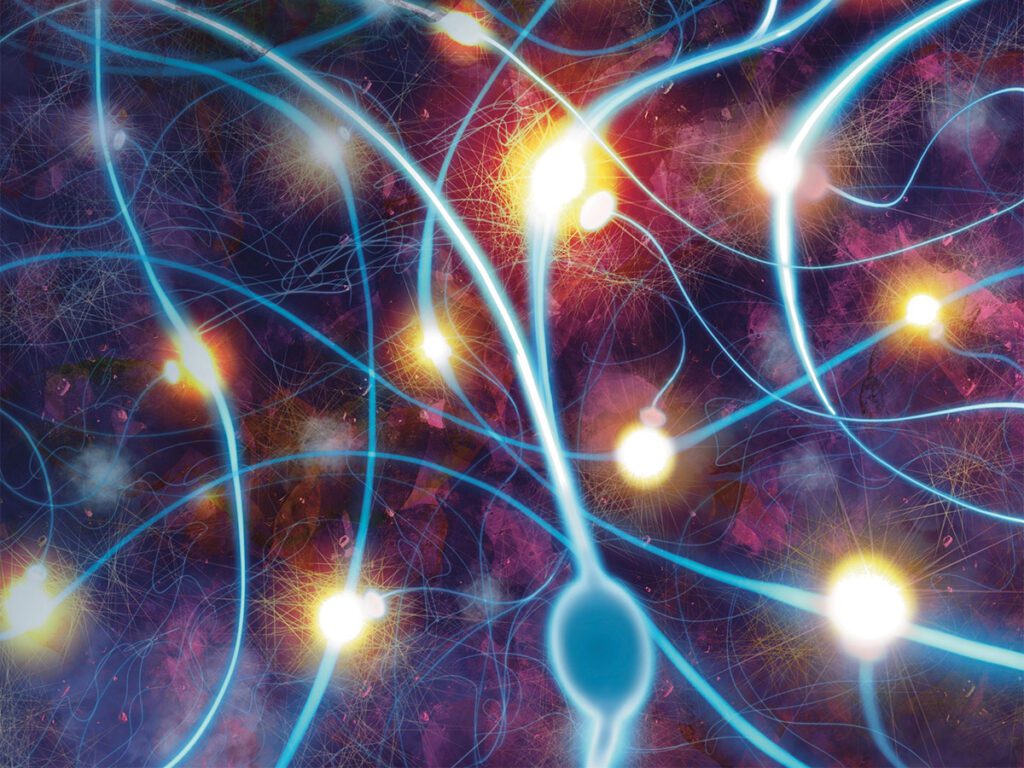
The researchers explored this puzzle using laboratory mice, focusing on KIBRA, a protein associated with memory performance in humans. They investigated how KIBRA interacts with PKMzeta, an enzyme essential for strengthening synapses in the brain. Although PKMzeta is vital for maintaining synaptic strength, it degrades within a few days. This study found that KIBRA acts as a “persistent synaptic tag,” a sort of adhesive that binds specifically to strong synapses and PKMzeta, but not to weaker ones.
According to the research team, when memories are formed, certain synapses are activated, and KIBRA is selectively positioned within these synapses. PKMzeta then binds to the KIBRA-synaptic tag, reinforcing these synapses. This process allows the synapses to attract newly produced PKMzeta, further stabilizing them.
Implications for Long Term Memory-Related Disorders and Educational Practices
The discovery of KIBRA’s role in memory retention has significant implications beyond the realm of neuroscience. By understanding the molecular mechanisms that stabilise memories, scientists may be able to develop targeted therapies that enhance memory retention or restore lost memories, potentially offering new treatments for memory-related conditions like Alzheimer’s disease and other cognitive disorders.
These findings provide educators with a deeper understanding of how long-term memory is formed and maintained, which can inform teaching practices. Recognizing that stable memories depend on reinforcing strong synaptic connections, educators might emphasize strategies that repeatedly activate these connections. For example, incorporating spaced repetition, active recall, and multimodal learning experiences can help strengthen the neural pathways associated with new knowledge and skills, ensuring they are more likely to be retained over time.
Furthermore, the study’s revelation that breaking the bond between KIBRA and PKMzeta can erase old memories, while increasing PKMzeta can enhance weak or faded memories, suggests that there may be ways to “boost” or “refresh” students’ memories through targeted educational interventions. Tailoring instruction to frequently revisit key concepts, encourage active engagement, and provide varied contexts for learning can help to fortify these molecular bonds, making learning more robust and enduring.
A Long-Standing Hypothesis Confirmed: Lessons for Educators
The research also confirms a hypothesis proposed by Francis Crick in 1984, which suggested that a mechanism similar to the philosophical concept of Theseus’s Ship could explain how long term memories persist despite the constant replacement of cellular components. Much like how new planks replace old ones in Theseus’s Ship to maintain its structure over time, KIBRA and PKMzeta interact to ensure memories remain stable even as their molecular components are continually renewed.
For educators, this concept can be metaphorically applied to the learning process: just as memories are continuously renewed and strengthened at the molecular level, so too should learning be viewed as an ongoing, dynamic process. Teaching strategies that continuously build on prior knowledge connect new learning to existing frameworks, and allow for the periodic reinforcement of skills and information can help ensure that learning is not only acquired but retained over the long term.
As we continue to unravel the complexities of the human brain, these findings underscore the importance of creating learning environments and instructional strategies that are aligned with how long term memory works at the molecular level. By integrating these insights into educational practice, we can better support students in developing the lasting knowledge and skills they need to succeed.
If you want to learn more about the steps required to set up a school check out some of our other articles:
– Steps to Setting Up a New School
– 10 Steps and Articles on How to Set Up a New School
– GSE International School Franchise Models
About GSE
Global Services in Education plans and opens international schools for investors, developers and governments, and manages them once they are running. GSE has delivered more than 60 school and education projects across 28 countries. Management agreements run a minimum of ten years.
The company was founded in 2011 by Greg Parry and Shanna Parry.