
School swimming pools are popular but decisions about design should be reviewed carefully. Swimming pools are valuable assets for schools, offering benefits that range from physical education to life-saving skills, water sports, and recreational activities. However, building and maintaining an on-site pool can be costly, leading many schools to consider alternative options like shared community pools or renting nearby facilities. This guide explores the types and dimensions of school pools, factors influencing pool choice, and the pros and cons of having an on-site pool versus using shared facilities.
Types of School Swimming Pools and Their Dimensions
- Competition Pools
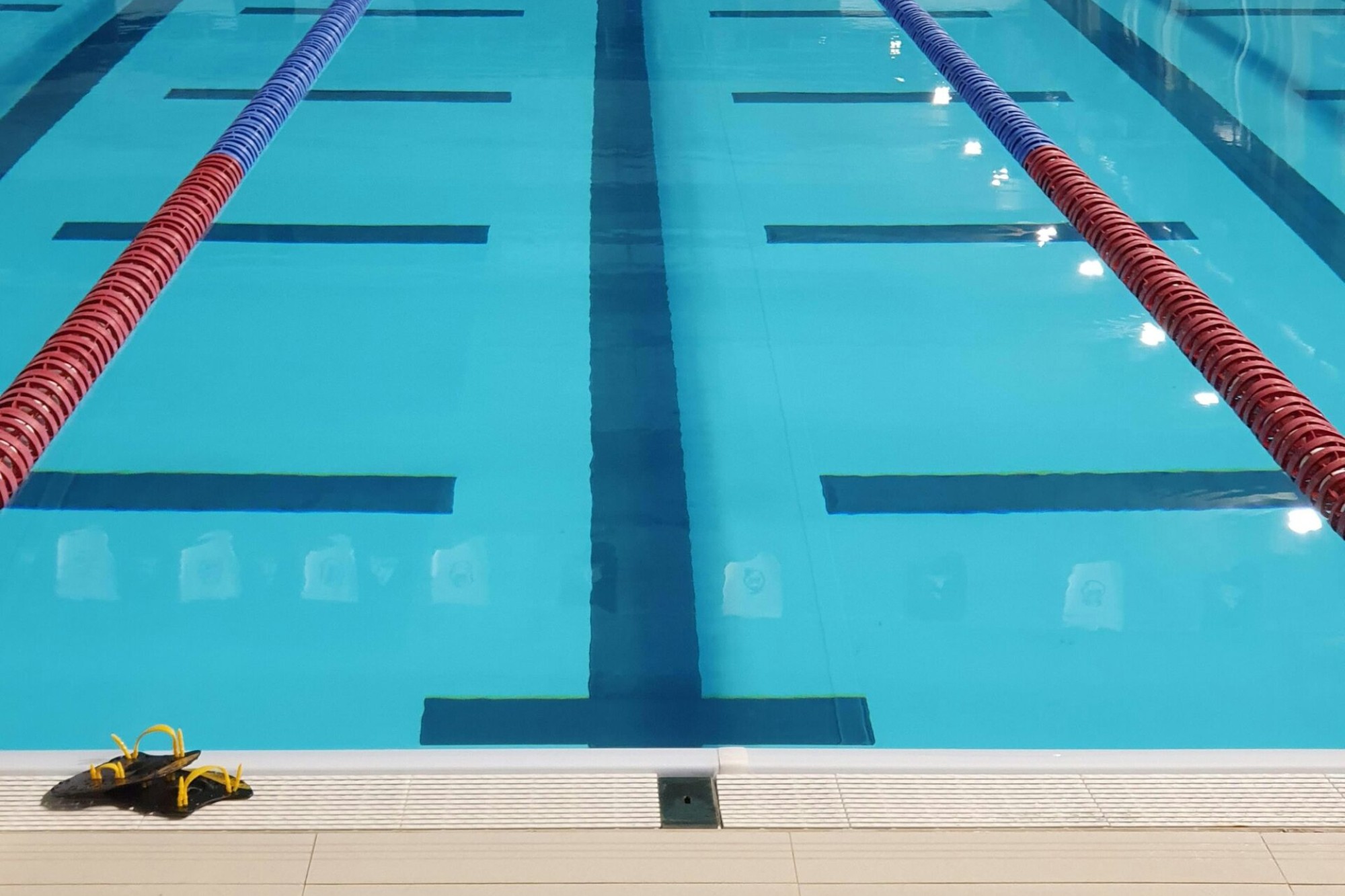
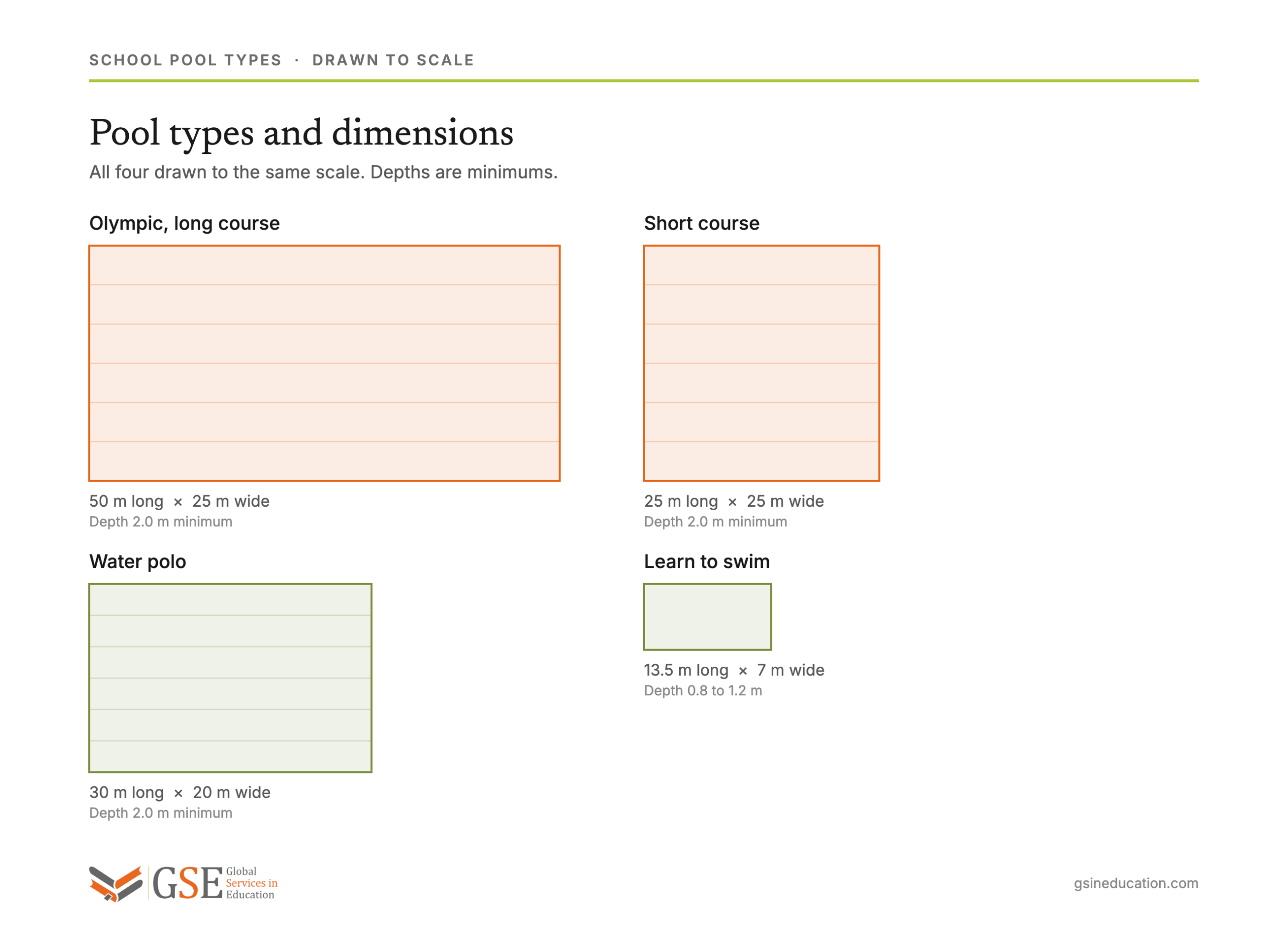
Competition pools accommodate racing, diving, and other sports, and require greater depth and length to support competitive standards.- Dimensions: Olympic-sized pools measure 50 metres (164 feet) long, 25 metres (82 feet) wide, and at least 2 metres (6.5 feet) deep. Smaller schools often use a short-course pool, measuring 25 metres (82 feet) long, which is still suitable for swim meets and practice.
- School Suitability: Large schools with a focus on competitive swimming may benefit from an on-site competition pool. For others, travelling to a nearby competitive facility may be more cost-effective.
- Learn-to-Swim Pools
These smaller, shallower pools are ideal for teaching young students swimming basics.- Dimensions: Typically 12 to 15 metres (39 to 49 feet) in length and 6 to 8 metres (20 to 26 feet) wide, with a depth of 0.8 to 1.2 metres (2.6 to 4 feet).
- School Suitability: Schools with early years or beginner swimmers may find a dedicated on-site learn-to-swim pool helpful for lessons. However, many community pools offer separate beginner areas that can serve the same purpose.
- Water Polo Pools
Water polo requires a larger, deeper pool due to the game’s physical demands.- Dimensions: Standard water polo pools measure 30 metres (98 feet) long, 20 metres (66 feet) wide, and at least 2 metres (6.5 feet) deep.
- School Suitability: For schools with water polo teams, an on-site water polo pool can streamline training. However, shared facilities are often preferable due to the significant cost and space requirements.
- Wading Pools for Early Years
Shallow wading pools introduce young children to water safely, perfect for sensory play and early water skills.- Dimensions: 6 to 10 metres (20 to 33 feet) in diameter, with a depth of 0.3 to 0.6 metres (1 to 2 feet).
- School Suitability: Schools serving early years may benefit from an on-site wading pool, though many may find local community pools with wading areas equally suitable.
Assessing the Right Pool Size Based on School Population and Use
- Student Population
Schools with larger populations generally need larger pools to accommodate classes or teams without overcrowding. Smaller schools can often meet their needs with smaller, shared-use pools or scheduled time at community facilities. - Programme Goals
- Learn-to-Swim: Shallow pools with easy access are ideal for beginners. This can be provided on-site or at community pools with dedicated learn-to-swim zones.
- Competitive Swimming: Competitive training requires full-length pools with proper starting blocks. On-site competition pools are advantageous but costly, so many schools opt to share them.
- Recreation and Physical Education: Renting nearby facilities often allows Flexible pool use.
- Indoor vs. Outdoor Pools
- Indoor Pools: Provide year-round access but require significant heating, ventilation, and lighting, raising construction and maintenance costs.
- Outdoor Pools: Less expensive to build but limited by seasonal use in colder climates. Many schools find community pools offer a good balance, with some facilities featuring both indoor and outdoor options.
On-Site Pool vs. Shared Facility: Pros and Cons
- Benefits of an On-Site Pool
- Convenience: On-site pools provide easy access, minimise travel time, and allow for flexible swimming classes and team practice scheduling.Customisation: Schools can design pools to meet specific needs, whether for competition, learn-to-swim programmes, or recreational use.Student Engagement: Immediate access to a pool can increase students’ participation in swimming, water sports, and fitness activities.
- Cost: Pool construction is a major capital investment, with ongoing expenses for maintenance, heating, and staffing (lifeguards, instructors). Due to climate control needs, indoor pools can be up to 50% more expensive to maintain.
- Space Requirements: Swimming pools occupy significant real estate, which may be difficult to justify in urban school environments or on campuses with limited space.
- Safety and Liability: Managing a pool entails strict safety protocols and liability concerns, requiring trained staff and regular inspections.
- Benefits of Using a Community or Shared Facility
- Cost Savings: Renting pool time at a community facility eliminates construction, maintenance, and staffing costs. Schools only pay for the time and resources they use. Flexible Options: Community pools often feature both learn-to-swim and competition areas, allowing schools to access different types of pools as needed without the burden of ownership.Professional Support: Most community pools are professionally staffed and maintained, providing lifeguards and instructors, which can alleviate some of the school’s staffing needs.
- Scheduling and Accessibility: Shared pools require coordination with other users, which can lead to scheduling conflicts, particularly during peak times. Schools may face restrictions on available times, which can disrupt regular physical education scheduling.
- Transport Logistics: Travelling to an off-site facility requires organising transportation, which can add time and expense, especially if students need frequent access to the pool.
- Less Customisation: Schools may not control the design, layout, or usage policies at shared facilities, limiting flexibility for customised programming.
School Swimming Pool Safety and Accessibility Considerations
- Safety Protocols
Schools with on-site pools must adhere to safety standards, including non-slip flooring, lifeguard presence, and emergency equipment. Community pools, however, typically follow these standards and have trained staff on-site, reducing the school’s liability. - Disability Access
Accessibility is essential in pool design, with features like ramps, lifts, and tactile markers for visually impaired students. Community facilities often have these in place, but schools should verify that the pool chosen meets accessibility needs.
Cost Considerations for On-Site School Swimming Pool Construction
- Initial Construction Costs
- Small Learn-to-Swim Pool: £50,000 to £100,000 ($65,000 to $130,000 USD).
- Competition Pool: £250,000 to over £1 million ($320,000 to $1.3 million USD), especially for indoor pools with additional facilities.
- Operational and Maintenance Costs
Indoor pools are more expensive to operate due to heating, ventilation, and humidity control requirements. Community pools typically cover these costs within rental fees, potentially saving the school considerable money.
Weighing Up Your Options for a School Swimming Pool
When deciding between an on-site school swimming pool and a shared facility, schools must balance convenience, cost, programme goals, and long-term use. For larger schools or those with strong competitive programmes, an on-site pool may provide more benefits despite higher costs. Smaller schools or those with limited budgets often find that renting time at a community pool or using shared facilities is more practical and cost-effective.
Ultimately, schools can make the best choice by carefully assessing their needs, programme objectives, and available resources, ensuring that students enjoy a well-rounded aquatics programme while maintaining financial and operational sustainability.
If you want to learn more about the steps required to set up a school check out some of our other articles:
– Steps to Setting Up a New School
– 10 Steps and Articles on How to Set Up a New School
– GSE International School Franchise Models
The building follows the model
Space, capacity and cost on a school facility are downstream of the enrolment it expects to reach and the fees it will charge. Design decisions taken before that modelling is done tend to lock in a building the business then has to work around for twenty years.
GSE plans and opens international schools for investors and developers, and manages them once they are running. GSE has delivered more than 60 school and education projects across 28 countries.
If you are still working through the numbers, start with how to open an international school or a school feasibility study.