
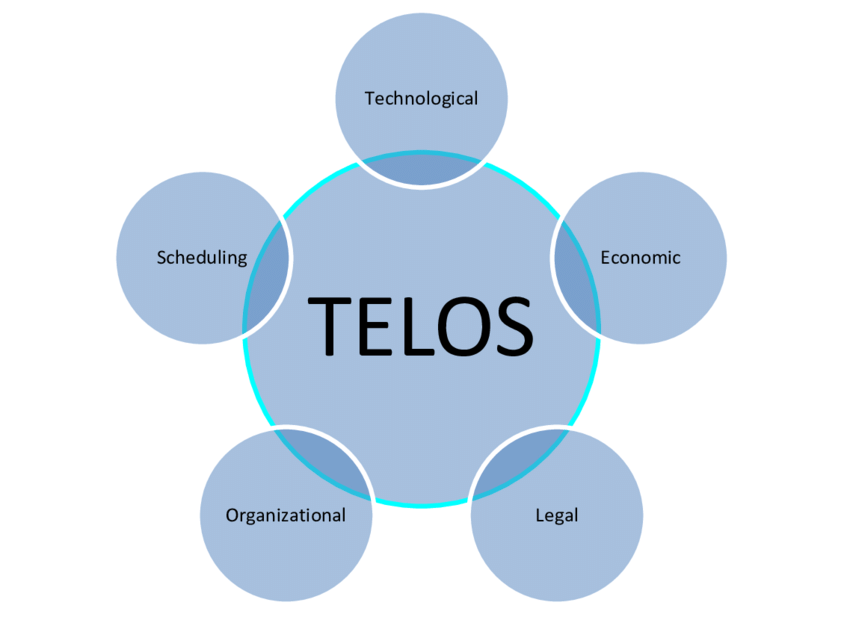
Planning an International School: A TELOS Feasibility Framework
When launching an international school, it’s not enough to have a vision.
2026 Update: Why Feasibility Planning Is More Critical Than Ever
In recent years, feasibility planning for international schools has become more complex and more important than ever before. Rapid changes in demographics, investor expectations, regulatory frameworks, and technology are reshaping how school projects are evaluated.
Investors now place stronger emphasis on long-term sustainability, operational resilience, and clear differentiation. At the same time, the rise of artificial intelligence and digital learning ecosystems means that technical feasibility must now include readiness for technology integration and data-driven decision-making.
These shifts reinforce the importance of structured feasibility frameworks like TELOS, which provide a holistic lens to evaluate both educational viability and investment readiness.
You need to ensure it’s feasible. The GSE TELOS feasibility framework helps examine each dimension systematically:
1. Technical TELOS Feasibility
- Key questions:
- Do we have access to qualified educators (e.g., IB/Cambridge-trained)? Or can we develop them?
- What campus infrastructure is required—classrooms, labs, digital platforms?
- Is technology (e.g., LMS, interactive tools) in place or adoptable?
- Is the school prepared for AI-enabled learning, including adaptive platforms, personalised assessment tools, and digital analytics to support teaching and operational efficiency?
- How to assess:
Conduct research, site visits, consult academic bodies, pilot online learning platforms. - Typical red flag: Difficulty in recruiting trained teachers or lack of suitable facilities. Both can undermine delivery.
2. Economic TELOS Feasibility
- Key questions:
- Are projected enrolments and tuition revenues sufficient to cover costs?
- What capital is needed upfront—land, construction, accreditation?
- Is investor interest strong enough to fund initial and rebound years?
- How to assess:
Build financial models—including NPV and IRR—to forecast returns. Benchmark against similar schools. - Typical red flag: Break-even delayed beyond year three or capital unlikely to be fully funded.
Increasingly, investors are also assessing education projects through a long-term asset lens. This includes evaluating the strength of underlying real estate, enrolment stability, scalability potential, and alignment with broader education investment strategies such as impact investing or PropCo/OpCo structures.
3. Legal TELOS Feasibility
- Key questions:
- Are there regulations governing private and international schools in the region?
- What accreditation processes must be followed to be competitive (e.g., IB, CIS)?
- Do zoning or visa laws pose a challenge?
- How to assess:
Consult with legal and educational experts. Map timelines for licensing and compliance. - Typical red flag: Pending regulation or protracted accreditation processes that stall the project timeline.
4. Operational TELOS Feasibility
- Key questions:
- Can the management team handle daily operations—HR, curriculum delivery, transport, meals?
- What training and systems will staff need?
- Will the school culture and governance structure support growth?
- How to assess:
Hold stakeholder interviews; perform readiness assessments; develop operational playbooks. - Typical red flag: No clear school leadership or operational systems, suggesting reliance on external hires.
Another critical factor in operational feasibility is leadership capacity. Many school projects fail not because of financial or technical constraints, but because they lack experienced founding leadership capable of translating vision into sustainable daily practice.
5. Schedule TELOS Feasibility
- Key questions:
- Can opening align with academic cycles (e.g., August/September intake)?
- Are construction, accreditation, recruitment, and marketing timelines realistic?
- What conflicts might arise with other local infrastructure projects (roads, utilities)?
- How to assess:
Map a project timeline with critical path milestones, buffers, and contingency plans. - Typical red flag: Misaligned start date leading to lost enrolment year or rushed, under-resourced prep.
Recent global trends also highlight the importance of contingency planning. Supply chain delays, regulatory approval timelines, and recruitment challenges can significantly affect school opening schedules. Feasibility assessments must therefore include realistic buffers and scenario planning.
Applying GSE’s TELOS Feasibility Test: A Sample Scoring Matrix
| Dimension | Assessment Method | Score (1–10) | Threshold Alert if ≤5 |
|---|---|---|---|
| Technical | Staff & facility audit | 7 | Hard to achieve IB staffing |
| Economic | Financial modelling | 6 | Enrolment below break-even |
| Legal | Regulation review | 8 | Full compliance possible |
| Operational | Stakeholder interviews | 5 | Need structured ops systems |
| Schedule | Gantt & milestone chart | 6 | Certification on track |
With the GSE TELOS Feasibility test, if any dimension, or the average, scores below 5, it signals fundamental risk in that area, prompting a revisit of assumptions or strategy.
A GSE TELOS feasibility assessment offers a holistic lens:
- Technical– Land and staffing align but infrastructure may need upgrades.
- Economic– Private investment and projected tuition are stable, but margin pressure exists.
- Legal– Licensing and accreditation appear navigable with expert guidance.
- Operational– Leadership structure needs strengthening; processes must be formalised.
- Schedule– Critical deadlines appear reachable, with buffer margins.
Next steps:
- Redesign funding packages to boost economic resilience.
- Strengthen operational architecture and establish core leadership and workflows.
- Monitor schedule and licensing closely to avoid delays.
The GSE TELOS Feasibility framework doesn’t just flag risks. It guides actionable interventions. It shows where to pivot, partner, or delay, helping you build a school that’s not just visionary, but truly viable.
Frequently Asked Questions About International School Feasibility
What is a TELOS feasibility study in education?
A TELOS feasibility study evaluates Technical, Economic, Legal, Operational, and Schedule factors to determine whether a school project is viable.
Why is feasibility planning essential before opening a school?
It helps identify risks early, ensures financial sustainability, and prevents costly delays or structural weaknesses.
How long does a feasibility study for a new school take?
Typically between three and six months, depending on project complexity, regulatory requirements, and market research scope.
What is the biggest risk when starting an international school?
The most common risk is overestimating enrolment demand without sufficient market analysis or operational readiness.
Explore Our Expert Insights
If you want to learn more about the steps required to set up a school, explore these essential resources: Steps to Setting Up a New School 10 Steps and Articles on How to Set Up a New School GSE International School Franchise Models
Why Choose GSE?
GSE provides specialist services for all types of educational institutions, including: International Schools Kindergartens & Early Learning Centres Vocational Colleges Universities & Higher Education Institutions Online & Virtual Schools
Global Expertise & Presence
GSE has successfully operated schools and education projects across the globe, including: Asia-Pacific: India, China, Vietnam, Malaysia, Cambodia, Thailand, East Timor, Mongolia, Myanmar, South Korea, Indonesia, Australia, Japan Middle East & Africa: Saudi Arabia (KSA), UAE, Bahrain, Iraq, Libya, Morocco, Equatorial Guinea, Zambia, Zimbabwe, Kenya North America: USA

Meet Our CEO & Education Expert
Greg Parry – International School Leadership Authority
Greg Parry is a renowned global expert in education leadership, having led projects in Australia, the Middle East, the United States, India, Indonesia, Malaysia, and China. His accolades include: Minister’s Award for Excellence in School Leadership School of Excellence Award for Industry/School Partnerships School of Excellence Award for Technology Innovation Recognised for Best Global Brand in International Education (2015 & 2016)
With a strong track record in school start-up projects, leadership training, and curriculum development, Greg is a trusted authority in building and managing high-performing international schools.