

For school leaders, boards, and investors, understanding culture and well-being as an energy system is increasingly central to long-term performance and sustainability.
Well-Being Is Not a Silo: What Schools Can Learn from Owen Eastwood and Belonging
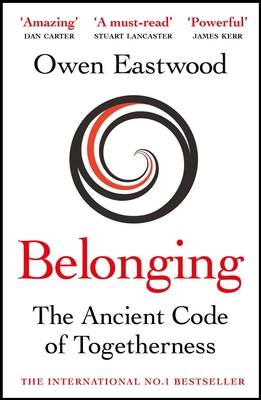
“When there are parts of this organism of a team that’s sick, unhappy, or taking a lot of energy away, it just affects everybody. We are all connected with each other.”
This observation from Owen Eastwood, one of the world’s leading high-performance coaches and the author of Belonging, captures a truth that many school leaders recognise instinctively, but often struggle to address systemically.
Schools, like teams, are living organisms. When one part of the organism is under strain, disengaged, or operating in a quietly toxic way, the impact is rarely contained. It spreads. Energy drains. Performance declines. Trust erodes.
Eastwood’s work challenges a persistent organisational mistake: the belief that well-being can be treated as a discrete programme, an initiative, or an individual responsibility.
Instead, he reframes well-being as something far more fundamental.
Well-being is energy.
Well-Being as Collective Energy, Not an Individual Trait
In many schools, well-being initiatives are thoughtful but narrow. They focus on individual resilience, stress management, or personal coping strategies. While these have value, they often miss the deeper issue.
As Eastwood explains, well-being is less about individual emotional state and more about the collective energy created by the environment people step into each day. The social setting, the quality of relationships, the level of trust, and the tone set by leadership determine whether people arrive with energy or lose it on entry.
This insight has been tested in some of the most demanding performance environments in the world. When Eastwood worked on culture and collective identity with the England national football team, the challenge was not technical ability. It was fear, pressure, and a fragmented sense of identity created by years of expectation and scrutiny. His focus was not on motivating individuals, but on rebuilding a shared story and sense of responsibility to one another. Energy shifted as belonging strengthened.
In schools, the parallel is immediate. Teachers and leaders do not underperform simply because they lack care or competence. They underperform when energy is consumed by mistrust, misalignment, or unresolved cultural tension.
Māori Foundations of Belonging and Well-Being
Eastwood’s thinking is deeply influenced by Māori worldviews from Aotearoa New Zealand. These perspectives do not separate individual well-being from collective health. They emphasise connection, lineage, and shared responsibility.
One foundational concept is whakapapa, the idea of genealogy and interconnectedness. Individuals are understood as part of an ongoing chain of relationships linking past, present, and future. Identity is relational, not transactional.
Another is tūrangawaewae, often translated as “a place to stand”. It describes the security that comes from knowing one belongs, that one’s presence is legitimate and valued. Without this, people operate defensively. With it, they contribute more freely.
There is also whānau, a broad sense of collective care and obligation that extends beyond immediate family. Success is shared. So is responsibility.
Underlying all of these is mauri, the life force or vital energy of a group. When mauri is strong, people feel aligned and purposeful. When it is weakened through conflict, neglect, or disconnection, performance suffers regardless of talent or resources.
These concepts help explain why Eastwood consistently describes well-being as energy. They also explain why the environment matters more than intention.
Well-Being Is Not a Silo
What the All Blacks demonstrate, and what Eastwood consistently returns to, is that belonging is not an abstract value. It is a practical discipline that governs how people behave when no one is watching.
The All Blacks Story Owen Eastwood Often Shares
In several interviews and podcasts, Owen Eastwood has spoken about the New Zealand All Blacks as a powerful real-world illustration of belonging in action.
The story centres on how the All Blacks understand identity and responsibility.
Players are taught that they do not own the jersey. They are temporary custodians of it. The shirt represents everyone who has worn it before and everyone who will wear it after. Each player is expected to leave the jersey “in a better place” than they found it.
This idea is rooted in the Māori concept of whakapapa. The lineage matters. What you inherit carries obligations, not entitlement.
Eastwood often contrasts this with cultures where selection is treated as individual achievement alone. In the All Blacks’ environment, selection is also a moral responsibility. Behaviour off the field matters as much as performance on it, because it reflects on the collective story.
One practical expression of this mindset, frequently cited, is that All Blacks players traditionally clean the changing room themselves after matches. Not because it is symbolic theatre, but because no role is beneath the group and no individual stands above it. Belonging is demonstrated through action, not slogans.
For Eastwood, this is not about rugby. It is about how identity shapes energy. When people feel part of something larger than themselves, and when expectations are shared and clear, energy flows towards the group rather than being spent on self-protection.
Why This Matters for Schools
Eastwood uses this story to make a simple but confronting point. High performance does not come from motivation alone. It comes from knowing who you are accountable to.
In schools, the parallels are striking.
Teachers and leaders are also custodians. They inherit cultures shaped by those who came before and influence the experience of those who come next. When that sense of custodianship is strong, people act with care, humility, and professionalism. When it is weak, energy is consumed by status, grievance, and disengagement.
Just as the All Blacks’ culture reduces ego and increases collective responsibility, schools with a strong sense of belonging reduce internal friction and protect energy for learning.
The lesson Eastwood draws is not that schools should copy sport, but that they should understand the same human truth. Belonging clarifies behaviour. Identity shapes effort. Culture determines whether energy is multiplied or lost.
What the All Blacks culture illustrates is that belonging is not an abstract value or a motivational idea. It is a lived discipline that shapes behaviour, responsibility, and energy when no one is watching. If collective identity can stabilise elite teams under pressure, the same dynamics shape performance in every complex human organisation, including schools.
Schools as Energy Systems
Seen through this lens, schools are not simply organisations that deliver curriculum. They are energy systems.
Leadership behaviour sets the emotional temperature. Governance decisions either protect or drain trust. Staff relationships either replenish or consume energy. Students, often more perceptive than adults realise, absorb and reflect these dynamics daily.
Eastwood’s work with Team GB is instructive here. Olympic environments bring together individuals from different disciplines for short, intense periods. Belonging must be created quickly or performance suffers. His focus was on psychological safety and shared purpose, enabling people to bring their full energy rather than protect themselves emotionally.
Schools face similar conditions, particularly during periods of growth, leadership change, or post-pandemic fatigue. New staff arrive. Expectations shift. Without deliberate attention to belonging, silos form and energy dissipates.
When Culture Is Ignored, Energy Leaks Away
Eastwood’s work with the South Africa national cricket team took place in a context shaped by history, identity, and transformation. Here, belonging was not a slogan. It was essential.
By grounding performance in shared identity and mutual respect, underlying tensions that could not be solved through technical coaching alone were addressed. Energy that had previously been lost to fragmentation was redirected towards collective effort.
Schools, particularly those operating in diverse or transitional contexts, face the same reality. Unaddressed cultural strain quietly drains energy. Addressed thoughtfully, it becomes a source of resilience and strength.
The lesson is not that schools should emulate sport. It is that human systems behave consistently across contexts.
Why Leadership and Governance Matter So Much
For school leaders, Eastwood’s thinking offers a clear reframing. Well-being is not an add-on. It is not the responsibility of one department or one initiative. It is the outcome of how the school is led, governed, and organised.
His work with Harlequins RFC reinforces this point. In elite professional environments, trust determines whether people contribute fully or hold back. Where leadership behaviour is inconsistent or overly controlling, energy is lost. Where expectations are clear and relationships are respectful, discretionary effort appears.
The same is true in schools. Boards that over-intervene, leaders who tolerate toxicity, or systems that reward compliance over professionalism all erode energy over time.
What Next for Well-Being?
One of the most compelling aspects of Eastwood’s work is its simplicity. People perform best when they feel they belong. Groups thrive when energy is protected and renewed. Well-being is not a personal weakness to be managed, but a collective condition to be designed.
Schools that understand this move beyond programmes and policies. They focus instead on creating environments where people can stand with confidence, contribute fully, and sustain their energy over time.
In education, as in elite performance environments, belonging is not a soft concept.
It is a strategic one.
Leaders, boards, and investors who understand this treat culture not as a risk to manage, but as a strategic advantage to protect.
For school leaders, boards, and investors, understanding culture and well-being as an energy system is increasingly central to long-term performance and sustainability.
Some of our most popular articles for the serious school investor:
Planning an International School: A GSE TELOS Feasibility Framework
Inside the School Investment Process: How We Structure Deals for Education Assets
What Investors and Educators Should Watch for in the Next Wave of Education Groups and Structures
From Land to Learning: The Complete Guide to Building a School as an Investment
Why the Profit of International Schools Stands Out: EBITDA, Sustainability & Investment Resilience

Meet Our CEO & Education Expert
Greg Parry – International School Leadership Authority
Greg Parry is an international education investor and leadership consultant. He is the Co-Founder and CEO of Global Services in Education, advising on school development, management, and education-focused investment worldwide. His work bridges leadership theory and practical transformation across more than thirty-five countries.
Greg Parry is a renowned global expert in education leadership, having led projects in Australia, the Middle East, the United States, India, Indonesia, Malaysia, and China. His accolades include:
🏆 Minister’s Award for Excellence in School Leadership
🏆 School of Excellence Award for Industry/School Partnerships
🏆 School of Excellence Award for Technology Innovation
🏆 Recognised for Best Global Brand in International Education (2015 & 2016)
With a strong track record in school start-up projects, leadership training, and curriculum development, Greg is a trusted authority in building and managing high-performing international schools.
📩 Contact Greg Parry Directly [Contact Link]
GSE’s Comprehensive School and University Development Services
GSE offers end-to-end solutions tailored for new and existing schools, covering:
School Investor, Management & Operations
Strategic Planning & Feasibility Studies, including Financial modelling for the School Investor
Architectural & Interior Conceptual Design
School Resources & ICT Planning
Marketing, Branding & Admissions
Staffing, Recruitment & Training
Curriculum Design & Accreditation Support
School Audits & Action Plans
Let’s Build a World-Class School Together!
Ready to start or improve your school?
Visit www.gsineducation.com to explore how
Recent Comments